
What Is the Cost of Living in Baltimore, MD?
The cost of living in Baltimore is 1% higher than the national average but 17% lower than Maryland’s overall state average, making it a relatively affordable option among major East Coast cities. Compared to nearby hubs like Washington, D.C., Baltimore’s total living expenses are approximately 23% lower, offering residents a more budget-friendly alternative.
Housing is one of the city’s most affordable factors, with costs about 14% lower than the national average. Rent for a one-bedroom apartment typically ranges from $1,200 to $1,500 per month, while a two-bedroom apartment averages between $1,500 and $1,800. Utility bills are slightly higher, with electricity averaging around $100 per month and water and sewer services between $80 and $100. Groceries and healthcare also trend slightly above national averages.
To live comfortably in Baltimore, residents should plan for total monthly expenses of about $2,700 to $2,900 for a single person and $5,500 to $6,200 for a family of four. These estimates include rent, utilities, food, transportation, and healthcare. While some living costs exceed national figures, the city’s lower housing prices and competitive wages make it a balanced and affordable place to live for most residents.
How Much Does Housing Cost in Baltimore?
In Baltimore, the average home value is $187,000, with a median sale price around $235,000, though these figures vary slightly by source and time of year. Housing costs in the city are significantly lower than in nearby suburban areas such as Howard County, making Baltimore a more affordable market for homebuyers. According to Apartments.com, the average rent across all property types is about $1,490 per month, which is 8.5% lower than the national average. Neighborhoods near downtown and the waterfront, like Federal Hill and Canton, tend to have higher prices, while more residential areas such as Hamilton Hills, Remington, and Patterson Park offer more budget-friendly options.
Studio Apartments
Studio apartments in Baltimore are typically the most affordable housing option, ideal for students and single professionals. The average rent for a studio apartment ranges from $800 to $2,000 or more per month, depending on its proximity to downtown, size, and access to public transportation. In neighborhoods such as Mount Vernon or Charles Village, smaller studios may start closer to $1,000, while high-rise units with modern amenities can exceed $1,400. Most studios in Baltimore include basic kitchen appliances, but parking and utilities are often extra. Overall, studios offer a compact and cost-effective way to live within the city.
1-Bedroom Apartments
A 1-bedroom apartment in Baltimore generally costs between $1,200 and $2,500+ per month, according to Zillow. Units closer to downtown, the Inner Harbor, or Johns Hopkins University tend to be at the higher end of that range, while suburban neighborhoods like Remington or Hampden provide more affordable options. Many 1-bedroom apartments in Baltimore include access to fitness centers or shared laundry, though parking often incurs an additional fee. For single renters or couples, 1-bedroom units strike a good balance between space and cost, remaining below rent levels in nearby major cities.
2-Bedroom Apartments
2-bedroom apartments are popular among small families and roommates seeking extra space. In Baltimore, such 2-bedroom apartments typically rent starting from $1,900 per month, depending on location and building amenities. Areas like Federal Hill and Canton command higher rates due to their proximity to restaurants and waterfront attractions, while Northeast Baltimore and Patterson Park offer more budget-friendly options. Average apartment sizes range from 850 to 1,100 square feet, and many include in-unit laundry or updated kitchens. Despite recent market fluctuations, 2-bedroom apartments in Baltimore remain more affordable than in nearby D.C. or New York.
3-Bedroom Houses
Families or professionals sharing a home can expect to pay $2,000 to $2,500 per month for a 3-bedroom house in Baltimore. Properties in areas such as Roland Park, Federal Hill, and Locust Point are on the higher end, offering larger spaces and private parking. Suburban neighborhoods like Hamilton Hills or Dundalk provide more affordable alternatives, often with private yards. Most 3-bedroom homes in Baltimore include around 1,400 to 1,800 square feet of living space, making them ideal for families. These homes are considerably cheaper than equivalent rentals in Washington, D.C., where 3-bedroom properties often exceed $3,500 monthly.
Security Deposits and Move-In Costs
In Baltimore, as of October 1, 2024, landlords are permitted to charge a maximum security deposit equal to one month’s rent, with an exception allowing up to two months’ rent in certain cases where utility assistance applies. Property owners are required to place all deposits in a separate interest-bearing account and must return the amount, including accrued interest, within 45 days after the tenant vacates, deducting only documented charges for unpaid rent or damages. For a typical one-bedroom apartment, renters should expect upfront costs of about $3,000, covering the first month’s rent and the deposit. Tenants with excellent credit or those signing longer leases may be able to negotiate lower deposits or have application fees waived, depending on the property and management company’s policies.
Home Buying Costs
For those planning to purchase a home, Baltimore offers lower entry prices than most U.S. metro areas. The median home price in Baltimore is around $235,000, which is 14% less than the national average. Typical down payments range from 3 to 20%, depending on loan type, while closing costs average 2 to 5% of the home’s price. Mortgage rates in Maryland currently average around 6.8% for a 30-year fixed loan, though buyers with higher credit scores may qualify for lower rates. Baltimore’s affordability makes it an attractive option for first-time buyers seeking lower property taxes and accessible financing programs.
What Do Utilities Cost in Baltimore?
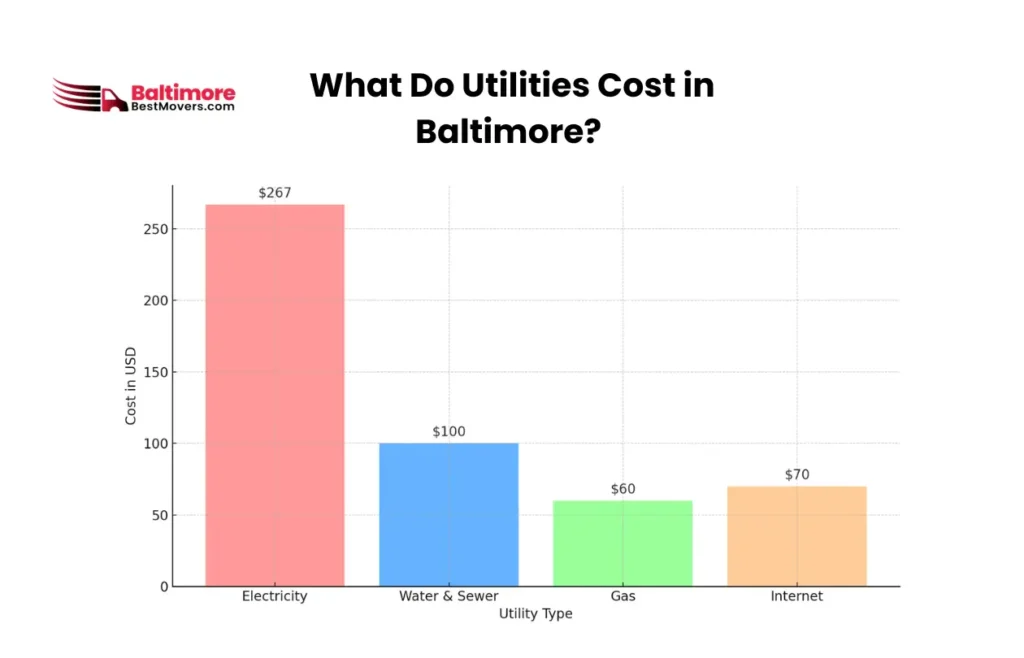
On average, residents in Baltimore must spend $250 to $350 per month on total utilities, which include electricity, water, sewer, gas, and internet services. A single person typically pays around $200 to $250 monthly, while a family of four may spend closer to $350 to $400. Electricity is generally the largest utility expense, followed by water and internet. Overall, utility costs in Baltimore are slightly higher than the national average but remain lower than those in major nearby cities like Washington, D.C., and Philadelphia, where monthly bills can exceed $400. These recurring costs play a significant role in household budgeting, especially during extreme weather months when heating or cooling usage increases.
Electricity Bills
According to EnergySage, electricity bills in Baltimore average $267 per month, based on an estimated household usage of 1,393 kWh and a rate of 19 cents per kWh. Actual costs vary depending on home size, occupancy, and seasonal energy demand, with smaller apartments averaging around $150 and larger homes exceeding $300 during peak summer or winter months. Electricity rates in Baltimore are slightly higher than the Maryland state average of 17 cents per kWh and the national average of about 16 cents per kWh, but still lower than in nearby Washington, D.C., where rates often surpass 21 cents per kWh. Seasonal fluctuations, appliance efficiency, and insulation quality are the main cost drivers. Residents can manage expenses through energy-efficient lighting, smart thermostats, and participation in Baltimore Gas and Electric’s Smart Energy Savers Program, which provides rebates for efficient upgrades and helps reduce overall energy consumption and long-term utility costs.
Water and Sewer
Water and sewer services in Baltimore typically cost between $80 and $100 per month, depending on household size and consumption. Smaller apartments or single occupants usually pay closer to $80, while families or multi-bedroom homes with higher water usage may approach $100 or more. Baltimore’s rates include both fixed service fees and usage-based charges. Because the city manages an extensive aging water system, maintenance and infrastructure costs contribute to slightly higher rates compared to nearby counties. Residents can lower their bills through water-saving fixtures, mindful consumption, and city-sponsored conservation programs. Overall, Baltimore’s water and sewer costs are comparable to those in Philadelphia but slightly higher than the Maryland state average.
Gas, Internet, and Other Utilities
Gas and internet services form another major part of monthly utility expenses in Baltimore. Gas bills average around $60 per month, while the gas price is $3.38 per gallon, primarily for heating and cooking, though costs rise in winter when demand increases. Internet service typically ranges from $50 to $70 monthly, depending on speed, provider, and bundled service options. Major internet providers include Comcast Xfinity, Verizon Fios, and T-Mobile Home Internet, each offering varying packages and promotional rates. Trash collection and recycling are generally included in city taxes for most residents. Households can save money by bundling internet and cable plans or selecting energy-efficient appliances that reduce gas usage. Compared to D.C. and Philadelphia, Baltimore’s gas and internet costs remain competitive, keeping total utility spending relatively stable for most households.
How Much Do Groceries Cost in Baltimore?
In Baltimore households, groceries make up a major portion of monthly living expenses, with a single person likely to spend around $400 to $500 per month on groceries, while a family of four typically spends between $800 and $1,000. Grocery prices in Baltimore are generally 3% higher than the national average, influenced by regional transportation costs and supply chain factors. These figures include common items such as produce, meats, dairy, pantry staples, and household supplies.
Here is a list of the basics of groceries and their cost:
- Loaf of Bread= $4.05
- Gallon of Milk= $4.82
- Carton of Eggs= $3.65
- Bunch of Bananas= $0.76
- Hamburger= $5.82
Monthly Costs for One Person
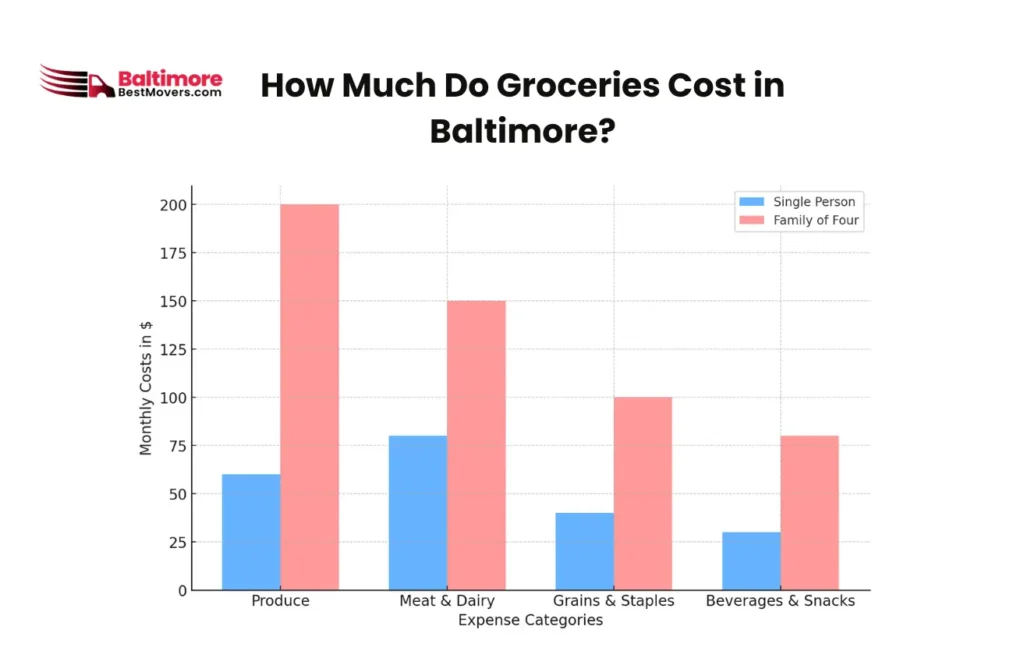
For a single person living in Baltimore, the average monthly grocery expense is about $300, though this can vary depending on lifestyle and eating preferences. A typical monthly food budget might include about $60 for produce, $80 for meat and dairy, $40 for grains and staples, and $30 for beverages and snacks. Those who cook most meals at home or shop at budget-friendly stores like Aldi or Lidl can often keep their grocery bill closer to $250 per month, while individuals who buy premium or organic products may spend $350 or more. Adjusting shopping habits such as purchasing store-brand items, cooking in bulk, or using coupon apps can significantly reduce costs. For comparison, a single person in Washington, D.C. spends roughly $340 per month, and in Philadelphia, the average is around $310, making Baltimore’s grocery expenses relatively moderate for a major metropolitan area.
Monthly Costs for a Family of Four
A family of four in Baltimore generally spends between $800 and $1,000 per month on groceries, depending on food preferences, the age of children, and where they shop. A typical monthly breakdown might include around $200 for produce, $150 for dairy and meat, $100 for snacks and pantry items, and $80 for beverages and household goods. Families that purchase organic foods or dine out frequently may spend closer to the upper end of this range. To manage expenses, many Baltimore families shop at bulk retailers such as Costco or Sam’s Club, use weekly circulars for discounts, or visit local farmers’ markets for affordable produce. Compared to nearby Washington, D.C., where families can spend up to $1,200 monthly, Baltimore’s grocery costs remain more budget-friendly, offering families the ability to maintain healthy eating habits without straining their overall monthly budget.
How Much Does Eating Out Cost in Baltimore?
Eating out in Baltimore costs $15-20 per person, depending on restaurant type, location, and meal style. On average, a fast-food meal costs about $10, while a mid-range restaurant meal averages between $20 and $30 per person. High-end dining at seafood or steak restaurants can reach $40 or more per person, especially in tourist-heavy areas like the Inner Harbor. In contrast, neighborhood eateries, cafes, and food stalls provide more affordable meals. Overall, dining costs in Baltimore are about 20% lower than in Washington, D.C., making it a more budget-friendly food destination. However, transportation and parking fees in popular areas can add $5 to $20 to the total cost of dining out.
Restaurant Prices
A mid-range restaurant meal in Baltimore typically costs between $20 and $30 per person, excluding beverages and tips. This usually includes an entrée and a side dish, with higher-end venues offering multi-course meals for $35 or more. Prices vary by neighborhood: upscale areas like Harbor East and Federal Hill average closer to $30 to $35, while restaurants in Hampden, Mount Vernon, and Charles Village offer meals starting around $20. Seafood-focused establishments and steakhouses tend to be the most expensive. Diners looking to save can take advantage of lunch specials, happy hour menus, or shared entrées, which can reduce dining costs by up to 25%.
Strip vs. Off-Strip Dining
Restaurants in Baltimore’s tourist-heavy areas, such as the Inner Harbor, Harbor East, and Power Plant Live, generally charge higher prices due to high demand and premium locations. Meals in these districts typically range from $25 to $40 per person, reflecting the elevated costs of waterfront views and upscale service. By contrast, neighborhood dining in areas like Remington, Canton, and Highlandtown is more affordable, averaging $15 to $25 per person. These local eateries often provide the same quality and portion sizes at a fraction of the price. Many residents prefer off-tourist dining for authentic food experiences and better value. To save on costs, diners can explore Lexington Market, Station North, or Hampden, where food vendors and casual restaurants serve quality meals without high tourist premiums.
Coffee Shops and Quick Meals
Coffee shops and quick meal options are among the most budget-friendly dining choices in Baltimore. A typical order at a local café costs $5 to $10 per person, with coffee and a pastry averaging around $6, and sandwiches or salads priced between $8 and $12. Popular cafés such as Pitango Bakery, Artifact Coffee, and Charmington’s offer affordable daily menus ideal for students and professionals. Quick meal options from food trucks, delis, or grab-and-go counters across downtown and Fells Point provide satisfying meals for under $10. These establishments are particularly convenient for lunch breaks or commuters. Many coffee shops also offer loyalty programs or meal bundles, allowing regular customers to save money over time while enjoying locally roasted coffee and fresh snacks.
Public Transportation Options
Baltimore provides convenient and affordable public transportation for those dining out across the city. A one-way fare on the MTA bus or light rail is $2, while day passes cost $4.60 and monthly passes $77. The Charm City Circulator operates free bus routes connecting major dining and entertainment districts, including Federal Hill, Inner Harbor, and Fells Point. For short trips, rideshare services like Uber and Lyft cost about $10 to $15 within city limits but can increase during peak hours. Using public transit instead of driving can help diners save up to $100 monthly on parking and gas. This makes it practical for residents and visitors to enjoy Baltimore’s dining scene without incurring additional transportation costs.
Here is a table highlighting regular fares for public transportation in Baltimore:
| Passes | Full Fare | Senior/Disability | Student | Mobility |
| Single Trip / One-way | $2 | $1 | $1.50 | $2.20 |
| Day Pass / 1-Day Pass | $4.60 | $2.30 | – | – |
| Weekly / 7-Day Pass | $22 | – | – | – |
| Monthly / 31-Day Pass | $77 | $23 | – | – |
| All Access Student Transit Pass | – | – | $57 | – |
| Mobility 20-Trip Book | – | – | – | $44 |
What Are Healthcare Costs in Baltimore?
Healthcare in Baltimore is 5% lower than the national average, with average costs for individual health insurance premiums costing around $400 per month, while families can expect to pay between $1,000 and $1,200 monthly, depending on coverage level and insurer. In addition, residents typically spend about $1,000 annually on out-of-pocket medical expenses, including copays, medications, and treatments not covered by insurance. Basic dental and vision care adds $300 to $500 per year, depending on the plan.
Health Insurance Premiums
Health insurance premiums are the fixed monthly payments made to an insurer in exchange for medical coverage. In Baltimore, the average premium for an individual is about $400 per month, while family plans average between $1,000 and $1,200, depending on plan type and coverage. Premium costs vary based on age, health condition, and the level of coverage selected. Employer-sponsored plans tend to be the most cost-effective, often covering a portion of the monthly premium, while private marketplace plans can be more expensive. Residents can compare options through the Maryland Health Connection, where subsidies are available for eligible individuals and families. Choosing higher deductibles, enrolling in Health Savings Account (HSA) plans, and staying in-network for care are effective strategies to lower premium costs while maintaining essential coverage.
Out-of-Pocket Medical Expenses
Out-of-pocket medical expenses refer to costs that are not fully covered by insurance, such as copayments, prescriptions, specialist visits, or emergency care. On average, Baltimore residents spend about $1,000 annually on these expenses, though this amount can increase for those with chronic conditions or limited coverage. Typical costs include $30 to $50 copays for doctor visits, $10 to $25 for generic prescriptions, and $75 to $150 for urgent care services. These costs are in line with the national average, though slightly lower than in major cities with higher healthcare provider fees. Residents can reduce out-of-pocket spending by selecting in-network providers, requesting generic medications, and scheduling preventive visits, which are often fully covered by most insurance plans. Using flexible spending or health savings accounts can also help offset recurring medical expenses throughout the year.
Dental and Vision Care
Dental and vision care are essential components of overall health and typically represent a smaller, yet consistent, part of healthcare costs in Baltimore. The average annual cost for dental and vision services ranges from $300 to $500 for basic coverage. Routine dental cleanings and exams typically cost $150 to $200 per visit without insurance, while insurance plans often cover preventive care entirely. Vision care expenses, including annual eye exams and basic eyewear, average around $150 to $250 per year. For those without employer-provided coverage, standalone dental or vision plans are available for $15 to $30 per month. Residents can save money by choosing dental discount programs, buying glasses online, or using clinic-based dental schools that provide low-cost services. Regular checkups and preventive care not only reduce long-term costs but also help avoid more expensive procedures later on.
How Much Does Childcare Cost in Baltimore?
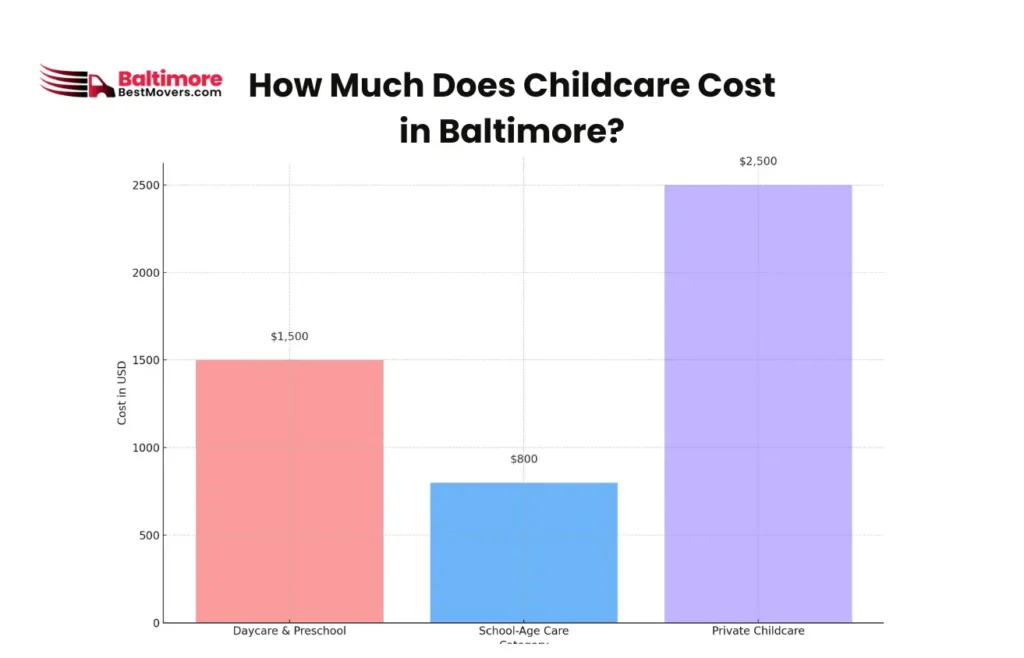
Childcare cost in Baltimore ranges from $800 to $2,500 per month, with an average of $19-$20 per hour. Families opting for private childcare, such as nannies or babysitters, typically spend $1,500 to $2,500 per month. Prices are generally lower than in nearby Washington, D.C., but still represent a significant portion of a household budget. Baltimore offers public, nonprofit, and state-subsidized childcare options that help families balance affordability and quality across income levels.
Daycare and Preschool
Daycare centers in Baltimore typically serve infants and toddlers, while preschools focus on early education for children aged three to five. Daycare costs range from $1,000 to $1,200 per month, depending on location, program hours, and staff-to-child ratios. Preschools cost about $1,100 to $1,500 monthly, particularly for accredited programs with structured learning activities. Prices are often higher in downtown areas or private centers offering extended care hours. Families seeking affordable options can explore state-subsidized programs, Head Start centers, or public preschool initiatives. Many facilities also provide income-based tuition adjustments and discounts for siblings, helping reduce the overall cost burden for families.
School-Age Care
School-age care programs, also known as after-school care, provide supervision and enrichment for children aged five to twelve once the school day ends. In Baltimore, after-school care costs between $400 and $800 per month, depending on how many days per week and hours per day children attend. Programs offered by Baltimore City Recreation and Parks, community centers, and local nonprofits often provide structured activities such as homework help, arts, and sports. To reduce costs, families can enroll in public school-based programs or take advantage of childcare tax credits and dependent care savings accounts, which help offset annual childcare expenses.
Private Childcare Options
Private childcare options in Baltimore include hiring nannies, au pairs, or part-time babysitters for in-home care. Costs vary based on experience, hours, and responsibilities. A full-time nanny typically charges between $2,000 and $2,500 per month, while part-time babysitters cost around $1,500 monthly. Families often choose private childcare for flexible schedules, personalized attention, or multiple children needing care. To find reliable providers, many parents use licensed nanny agencies, background-checked platforms, or referrals from local networks. Sharing a nanny with another family or setting part-time arrangements can help reduce total monthly costs while maintaining a consistent care routine for children.
What Are the Education Costs in Baltimore?
Education costs in Baltimore vary widely depending on whether students attend public, private, or higher education institutions. Private schools typically charge $10,000 to $20,000 per year, with additional expenses for extracurricular activities and uniforms. Higher education costs range from $10,000 per year for public universities to over $50,000 annually at private colleges such as Johns Hopkins University. While Baltimore’s education costs are comparable to national averages, private and higher education remain major financial commitments for families. However, the availability of scholarships, state-funded aid, and public education options helps make schooling accessible across different income levels.
Public Schools
Public schools in Baltimore offer free education funded through local and state taxes, with the 2023-2024 budget representing $22,424 per student. However, families should plan for some additional costs. Parents typically spend $50 to $100 annually on basic school supplies and another $200 to $500 for extracurricular activities such as sports, band, or art programs. Field trips and class projects can add modest fees throughout the school year. Many schools provide fee waivers or reduced-cost programs for low-income families through the Baltimore City Public Schools system. Public education remains the most affordable option for most residents, offering comprehensive academic and extracurricular programs without tuition charges.
Private Schools
Private schools in Baltimore generally charge between $10,000 and $20,000 per year, depending on grade level, reputation, and facilities. Prestigious institutions such as Roland Park Country School and Friends School of Baltimore fall on the higher end of this range, often exceeding $25,000 for upper grades. Beyond tuition, parents should anticipate $500 to $1,000 annually for extracurricular fees, plus costs for uniforms, books, and technology. Many schools provide financial aid, merit scholarships, or sliding-scale tuition programs to make education more accessible. While private schools represent a significant investment, they often offer smaller class sizes, specialized curricula, and strong college preparation programs.
Higher Education
Baltimore hosts several major universities with tuition costs that vary significantly between public and private institutions. In-state students at the University of Maryland, Baltimore County (UMBC) or Coppin State University pay around $10,000 to $15,000 per year, while out-of-state students pay closer to $25,000. In contrast, private universities such as Johns Hopkins University and Loyola University Maryland charge between $50,000 and $60,000 annually, excluding housing, books, and living expenses, which can add another $15,000 per year. Students can offset these costs through federal grants, state scholarships, work-study programs, and tuition reimbursement initiatives offered by employers. Baltimore’s diverse educational landscape ensures options for a wide range of academic and financial needs.
What Taxes Do You Pay in Baltimore?
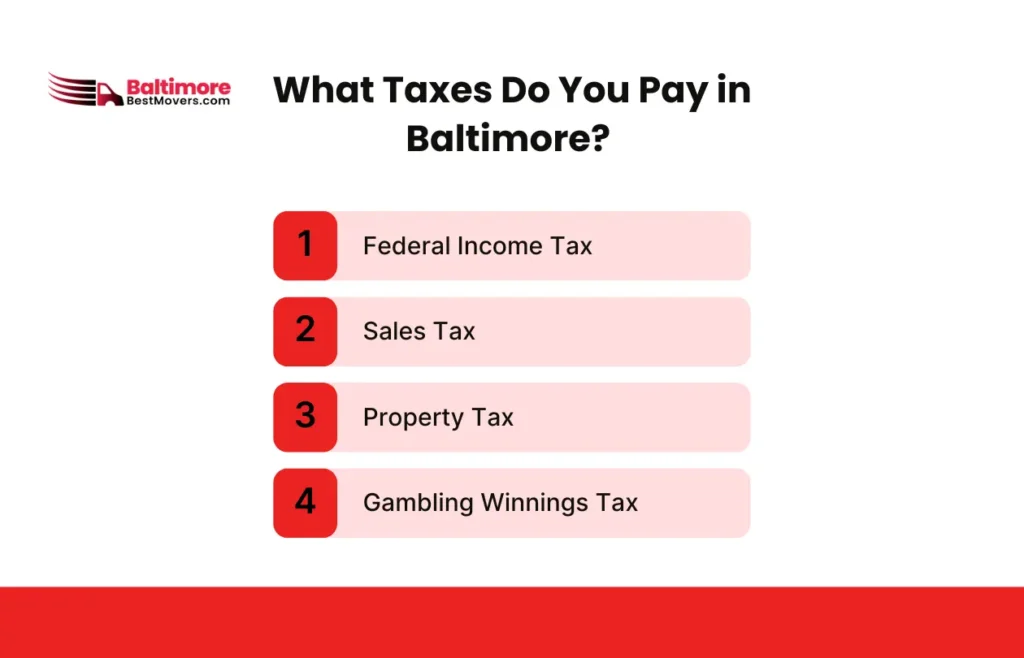
Residents of Baltimore pay a mix of federal, state, and local taxes, including federal income tax, sales tax, property tax, and gambling winnings tax. The federal income tax rate ranges from 10% to 37%, depending on income level. Baltimore also includes a local income tax known as a local “piggyback” tax, which is 3.2% of a resident’s taxable income. Additionally, the state sales tax stands at 6%, which applies to most goods and services but excludes essentials like groceries and prescription drugs.
Federal Income Tax
The federal income tax applies to all residents of Baltimore based on earnings from wages, investments, or business income. It is a progressive tax, with rates ranging from 10% for low-income earners to 37% for high-income earners. For 2025, single filers earning up to $11,600 fall in the 10% bracket, while those earning above $609,350 fall into the 37% bracket. Married couples filing jointly face slightly higher thresholds. Taxpayers can reduce their taxable income through credits and deductions, including the child tax credit, education deductions, and mortgage interest deductions. Filing accurately and leveraging these benefits can significantly lower annual federal tax liabilities for Baltimore residents.
Sales Tax
The Maryland sales tax rate for Baltimore is 6%, applied to most retail goods, services, and prepared food purchases. However, groceries, prescription drugs, and medical devices are exempt. This rate is uniform across the state, ensuring consistency between Baltimore and the surrounding counties. For large purchases like furniture or electronics, this adds $6 for every $100 spent. While not among the highest in the U.S., this rate still impacts everyday spending. Residents can minimize sales tax expenses by prioritizing exempt items and purchasing used goods. Businesses must collect and remit sales tax to the Maryland Comptroller, making it a key revenue source for state and local budgets.
Property Tax
For the 2024-2025 fiscal year, Baltimore’s property tax rate is 2.248%, or $2.248 per $100 of assessed real property value, one of the highest rates in Maryland. Property assessments are determined by the city based on home value, location, and prevailing market trends. For example, a home valued at $250,000 would generate an annual property tax bill of approximately $5,620. These taxes play a crucial role in funding public schools, infrastructure improvements, emergency services, and community development programs. Homeowners can potentially reduce their property tax burden by applying for Homestead Tax Credits, senior exemptions, or appealing overassessed valuations. While higher than rates in surrounding counties, Baltimore’s property taxes directly support the city’s ongoing urban revitalization and essential public services.
Gambling Winnings Tax
Gambling winnings for Baltimore residents are subject to both federal and Maryland state income taxes, rather than a flat city-specific rate. At the federal level, gambling income is taxed as ordinary income, with mandatory 24% federal withholding on winnings exceeding $5,000 (such as lottery prizes or large casino payouts). In Maryland, state withholding on gambling winnings over $5,000 is 9.25% for residents and 8.0% for nonresidents, applied at the time of payout. However, the total amount owed depends on the taxpayer’s Maryland income tax bracket, which ranges up to 6.25%, plus Baltimore City’s local income tax rate of 3.20%. All gambling income must be reported on both federal and state tax returns, and residents may deduct gambling losses up to the amount of their winnings if they itemize deductions.
How Much Does Entertainment Cost in Baltimore?
Entertainment in Baltimore ranges from affordable community events to high-end sports and concert experiences. The city’s cultural mix offers options for every budget, from live jazz shows in Fells Point to major league sports at Oriole Park and M&T Bank Stadium. Overall, entertainment prices in Baltimore are around 10-15% lower than in Washington, D.C., making the city relatively affordable for leisure activities. Movie tickets and concerts are modestly priced, while sports and theater events can be more expensive depending on the venue and demand. There are also numerous free or low-cost entertainment options, including outdoor festivals, art walks, and museum days.
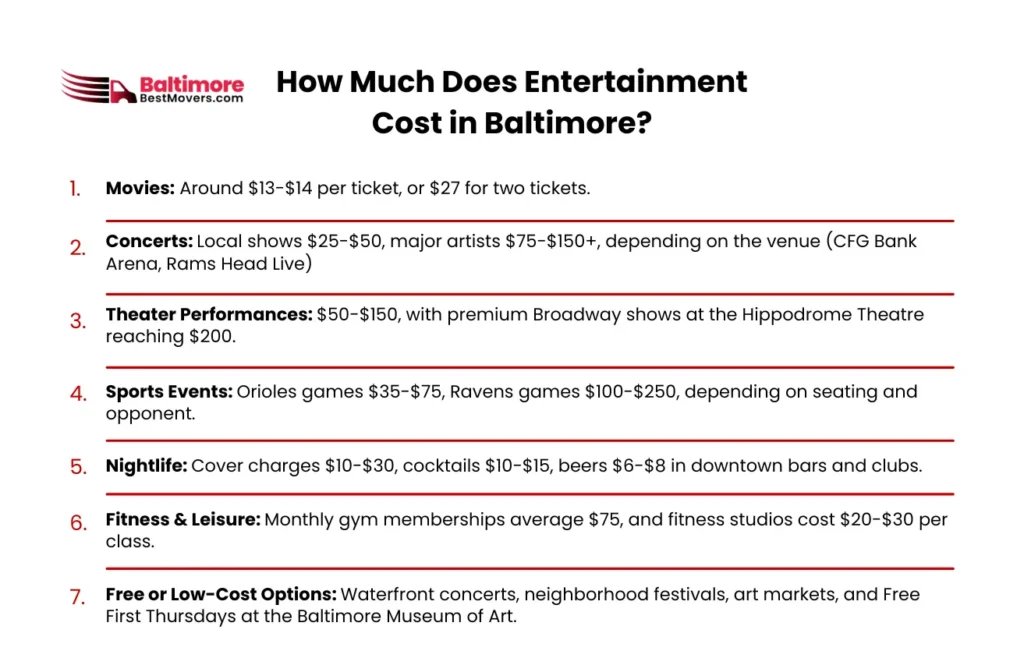
Baltimore’s entertainment costs strike a balance between affordability and variety, offering residents a lively mix of arts, sports, and nightlife without the high price tag seen in nearby metropolitan areas. Typical Entertainment Costs in Baltimore include:
- Movies: Around $13-$14 per ticket, or $27 for two tickets.
- Concerts: Local shows $25-$50, major artists $75-$150+, depending on the venue (CFG Bank Arena, Rams Head Live).
- Theater Performances: $50-$150, with premium Broadway shows at the Hippodrome Theatre reaching $200.
- Sports Events: Orioles games $35-$75, Ravens games $100-$250, depending on seating and opponent.
- Nightlife: Cover charges $10-$30, cocktails $10-$15, beers $6-$8 in downtown bars and clubs.
- Fitness & Leisure: Monthly gym memberships average $75, and fitness studios cost $20-$30 per class.
- Free or Low-Cost Options: Waterfront concerts, neighborhood festivals, art markets, and Free First Thursdays at the Baltimore Museum of Art.
What Other Monthly Expenses Should You Expect in Baltimore?
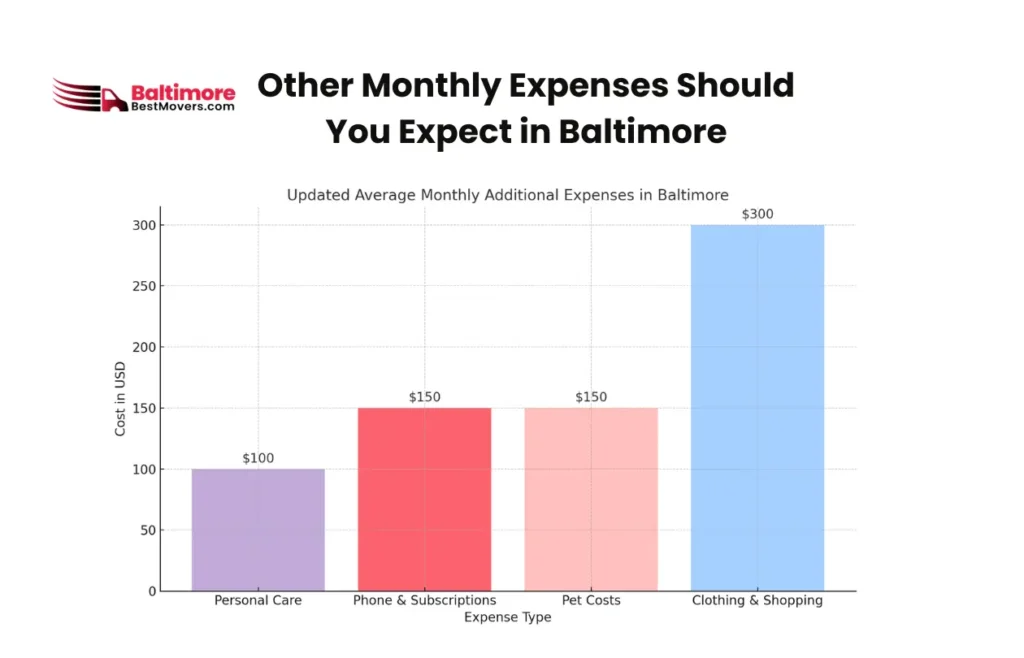
Beyond housing, utilities, and transportation, Baltimore residents face additional monthly expenses, including personal care services, phone and subscription plans, pet care, and clothing or shopping habits. On average, these expenses can add $250 to $600 per month to a household budget. Costs vary depending on lifestyle, family size, and personal spending patterns.
Personal Care Services
Maintaining personal grooming and wellness in Baltimore typically costs between $30 and $100 per month, depending on lifestyle and frequency. A standard haircut is usually $30 to $50, while specialty salon services or spa treatments can reach $80 or more. Gym memberships vary from $40 to $100 per month, with boutique studios like yoga or spin classes averaging $25 per session. Residents seeking budget-friendly options often use community fitness centers, home workout apps, or discount salons. With numerous service providers citywide, from neighborhood barbershops to luxury spas, it is easy to balance self-care with affordability.
Phone and Subscriptions
Monthly communication and entertainment expenses in Baltimore range between $50 and $150, depending on plan type and service usage. Basic cell phone plans cost around $60 to $80 per month, while premium unlimited data packages can exceed $100. Internet and mobile bundles often add $60 to $80 to monthly costs. Subscription services such as Netflix, Disney+, or Spotify collectively average $30 to $50 each month. Families or individuals with multiple subscriptions often reach the higher end of this range. To manage expenses, residents can switch to prepaid or family phone plans, use bundled deals, or review and cancel unused streaming subscriptions regularly.
Pet Costs
Owning a pet in Baltimore comes with ongoing monthly costs that typically range from $50 to $150. Pet food averages $30 to $60 per month, while grooming services cost around $40 to $80, depending on the animal’s size and breed. Routine veterinary care adds approximately $15 to $30 monthly when averaged annually. Dog owners generally face higher expenses due to grooming and medical needs, while cat care tends to be lower. Budget-conscious pet owners often reduce costs by purchasing supplies in bulk, visiting low-cost veterinary clinics, or maintaining preventive care. Regular checkups help avoid major medical bills and ensure pets stay healthy without straining the household budget.
Clothing and Shopping
Spending on clothing and shopping in Baltimore varies based on style preferences, household size, and shopping frequency. Average monthly costs range from $100 to $300, with essential wardrobe items typically costing $100 to $150, and seasonal or brand-name purchases pushing expenses toward $300. Families with children often spend more due to school and growth-related needs. Affordable options are widely available through discount retailers, outlet malls, and secondhand stores. Residents who plan by shopping during clearance events or using loyalty programs can easily manage expenses while maintaining quality and style. Baltimore’s diverse retail scene makes it possible to stay fashionable on nearly any budget.
What Salary Do You Need to Live Comfortably in Baltimore?
To live comfortably in Baltimore, a single adult generally needs an annual income of $80,000 to $85,000, while a family of four requires about $200,000 to $220,000 to maintain a moderate lifestyle without financial stress. These estimates factor in essential costs such as housing, utilities, transportation, food, and healthcare.
Rent for a one-bedroom apartment averages $1,400 per month, while utilities and internet typically add $250-$300. Monthly groceries cost around $300 for an individual and $900 for a family, with transportation averaging $200-$250 depending on commute distance and vehicle ownership. Healthcare expenses, including insurance and out-of-pocket costs, add roughly $400-$500 per person monthly, depending on coverage.
While Baltimore’s average household income is approximately $60,000, rising living costs mean residents often need higher earnings to maintain financial comfort. Those earning around $85,000 can cover necessities and discretionary spending, while higher incomes allow for savings, home ownership, and long-term financial stability in the city.
What Are the Economic Factors Affecting Baltimore’s Cost of Living?
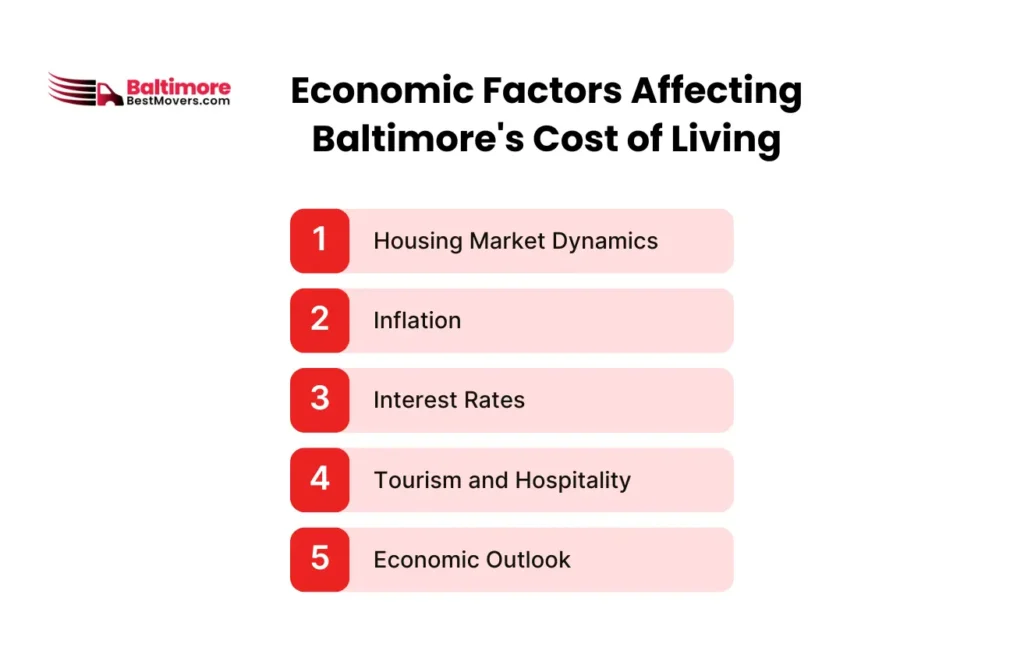
Baltimore’s cost of living is shaped by multiple interconnected economic factors, including housing market conditions, inflation, interest rates, tourism, and the city’s broader economic outlook. The housing market plays a dominant role, as rising mortgage rates and limited inventory continue to drive up prices. Inflation affects daily expenses like food, utilities, and healthcare, while higher interest rates increase borrowing costs for both households and businesses. Meanwhile, tourism contributes to local service demand and employment, influencing prices in hospitality and dining.
Housing Market Dynamics
The housing market in Baltimore directly affects both homeownership and rental affordability. In 2024, the median home price is approximately $235,000, while the average rent for a one-bedroom apartment sits around $1,650 per month. High demand in neighborhoods like Federal Hill and Canton, combined with limited new housing inventory, continues to push prices upward. Mortgage interest rates above 6.8% have also made it harder for first-time buyers to enter the market. For renters, competition remains high, particularly near universities and job centers. These market dynamics make housing one of the largest contributors to Baltimore’s overall cost of living and a key challenge for middle-income households seeking long-term stability.
Inflation
Recent inflation trends have significantly impacted Baltimore’s everyday costs. As of mid-2025, the regional inflation rate hovers around 3.4%, driving price increases across groceries, gas, and healthcare. Essentials such as a loaf of bread ($4.05), milk ($4.82), and eggs ($3.65) have risen about 10% compared to 2023. Utility and service costs have also climbed due to supply chain pressures and labor shortages. This sustained inflation reduces purchasing power, especially for fixed-income households. Residents can manage inflation-related challenges by budgeting strategically, focusing on local discount retailers, and using public transportation or bulk purchasing to offset cost increases. While inflation has cooled slightly from its pandemic peak, it remains a key factor shaping the city’s affordability.
Interest Rates
Interest rates have had a major influence on Baltimore’s housing and consumer borrowing costs. In 2025, the average 30-year fixed mortgage rate is approximately 6.8%, significantly higher than the historic lows seen in 2021. This increase has raised monthly mortgage payments by hundreds of dollars for new buyers and slowed property sales. Auto loan rates, now averaging 7% to 9%, have made vehicle ownership more expensive, while credit card rates exceed 20% for many consumers. These higher borrowing costs reduce disposable income and make financing major purchases more difficult. For households managing debt, refinancing or consolidating loans can help ease the burden. Until rates stabilize, Baltimore’s residents will continue to feel pressure from elevated financing expenses.
Tourism and Hospitality
Tourism remains a vital part of Baltimore’s economy, supporting thousands of jobs and generating millions in annual revenue. In 2024, the city welcomed nearly 23 million visitors, drawn to attractions like the Inner Harbor, National Aquarium, and Camden Yards. This influx stimulates growth in the hospitality, retail, and restaurant sectors but also contributes to higher prices in these areas. Hotel rates, for example, average $160 to $220 per night during peak season, while dining in tourist-heavy districts can be 15% to 25% more expensive than in local neighborhoods. Tourism’s benefits include job creation and tax revenue, but it also influences local prices, making some services costlier for year-round residents in high-traffic zones.
Economic Outlook
Baltimore’s economic outlook in 2025 shows steady but uneven growth across key sectors such as healthcare, education, logistics, and technology. The city’s unemployment rate stands around 4%, and wage growth has averaged 3.9% annually, slightly above national trends. Investments in infrastructure and port development are improving job opportunities, while initiatives like the Baltimore Together Economic Development Plan aim to attract new industries. However, persistent challenges such as housing inequality, rising consumer debt, and population decline continue to affect long-term stability. A positive outlook may gradually ease affordability pressures if wage increases keep pace with inflation. Overall, Baltimore’s economic conditions suggest cautious optimism but highlight the need for balanced growth to sustain a comfortable standard of living.
How Do You Plan a Cost-Effective Move to Baltimore?
To plan a cost-effective move to Baltimore, start by understanding typical relocation costs and setting a clear budget. A local move usually ranges from $900 to $1,600, while a long-distance move costs between $2,000 and $4,500, depending on distance, home size, and services used. Renting a DIY truck or portable container can be cheaper, averaging $1,000 to $2,800, and offers flexibility for those looking to save. Moving costs also vary by season, weight, and service type, so planning early and avoiding peak times helps control expenses.To keep your move affordable, declutter before packing, compare quotes from licensed movers, and use free boxes or recycled materials. Moving during off-peak months (October to March) can save up to 20%. For convenience, hiring Baltimore professional movers may cost more but offers benefits like insured handling, efficient transport, and reduced stress, making it ideal for a smooth and secure relocation to Baltimore.


